Posted on
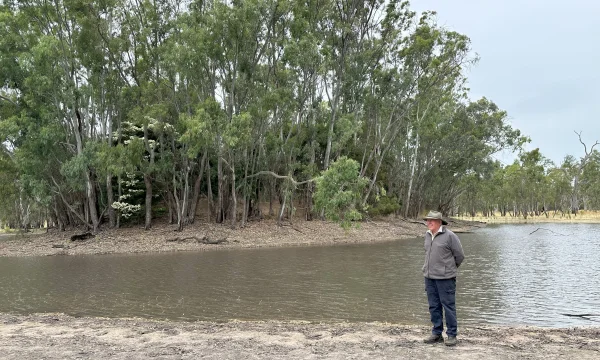
The Limestone Coast Landscape Board has seen astounding results in recent bat detector monitoring. The results have shown more than 2,000 likely Southern Bent-wing Bat calls at a restored wetland near Wrattonbully.
Bat detectors have been set up on local properties across the Limestone Coast as part of the Limestone Coast Landscape Board Southern Bent-wing Bat project. These detectors record the echolocation calls that small insect-eating bats use to hunt and navigate. Because each species produces distinct calls, researchers can accurately identify which bats are using specific areas, even though their calls are inaudible to humans.
The detectors were installed to increase awareness around bat diversity, locate Southern Bent-wing Bat foraging habitat and encourage revegetation of habitat to support bats as they fly from one property to another.
Limestone Coast Landscape Board Project Coordinator, Cassie Hlava said “Over just 22 nights of monitoring at a restored swamp near Wrattonbully, we detected more than 9,400 bat calls”.
“This result is fantastic. With over 1,400 confirmed and 1,400 probable Southern Bent-wing Bat calls, we were really surprised that they were the most commonly recorded bat on the property during the survey period.”
“Property owners the McArthur family should be commended on their restoration efforts”. Ms Hlava added.
The McArthur family have been restoring the swamp on their property since 1979, which is now listed under a heritage agreement.
“Through these long-term efforts of extensive planting and habitat protection, we are seeing fantastic results. The swamp is proving to be high-value habitat for the critically endangered mammal.” said Ms Hlava.
Property owner Mr Milton McArthur was quite astounded to find out the results of this survey. The data confirmed heavy use of the property by the Southern Bent-wing Bat, validating years of work to increase foraging habitat.
“I was just delighted. Because of their nocturnal habits you never see them, and I never realised how many were there. It’s just lovely to know that our property is providing habitat for them.” Mr McArthur said.
“These results demonstrate the effectiveness of coordinated restoration efforts and highlight the importance of continued collaboration with private landholders” Ms Hlava said.
Bat Ecologist, Nicola Bail analysed the extensive dataset. “In addition to the critically endangered Southern Bent-wing Bat, the endangered Eastern False Pipistrelle and endangered Gould’s Long-eared bat were both recorded on the McArthur’s property. In total, over 12 insect-eating bat species were recorded at the swamp, providing vital insect control.” Ms Bail said.
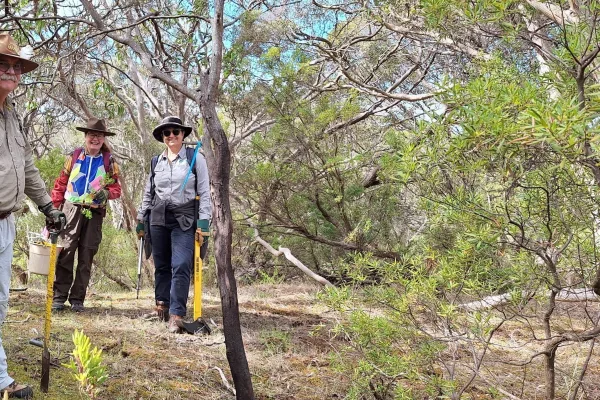
The Limestone Coast Landscape Board recently planted river red gums and other water tolerant plant species around a swamp in Naracoorte Caves National Park and along Mosquito Creek to further increase foraging habitat for the Southern Bent-wing Bat. We look forward to the results of this in the future.
This project is funded by the Australian Government’s Natural Heritage Trust and delivered by the Limestone Coast Landscape Board, a member of the Commonwealth Regional Delivery Partners panel.
Contact Cassie for more information on how to support bats on your property