Managed aquifer recharge using water from the drains
In 2022–23, the Limestone Coast Landscape Board did a feasibility study on managed aquifer recharge using water from the drains. This work helps us plan for water security in the Limestone Coast, supporting primary production and the environment. The study explored the challenges and opportunities for managed aquifer recharge in the Lower Limestone Coast.
Read the managed aquifer recharge feasibility study [PDF, 10 MB]
What the feasibility study explored
The study investigated:
- how much water is available in the South East Drainage Network (drainage network)
- demand for access to more water
- if it is possible to store water in the aquifer for use by primary industries.
The study was undertaken as three parts:
- Drainage network Assessment.
- Managed aquifer recharge feasibility study.
- Risk assessment and decision support modelling.
For this study managed aquifer recharge is the process of intentionally draining water into an aquifer and storing it beneath the ground for later use. In certain circumstances it is a proven water security measure. There are successful schemes in Australia that range in scale from golf courses to major irrigation precincts.
Working together with partners and stakeholders
This study was co-ordinated by the Limestone Coast Landscape Board in partnership with the South Eastern Water Conservation and Drainage Board and Primary Producers Sustainable Water Working Group. The work was undertaken by Innovative Groundwater Solutions Pty Ltd. who specialise in solving complex groundwater management problems in Australia and internationally.
What we learned from the study
The study informs the availability and quantity of water in the drainage network. The greatest availability of water in the drainage network is in areas near the coast, including the karst rising springs and creeks south of Mount Gambier. This can be a long way from areas of high groundwater demand or environmental assets in need of a restoration.
Salinity of water from the drainage network is likely to be one of the greatest water quality limitations for managed aquifer recharge (managed aquifer recharge) options. Contaminants such as nutrients, agricultural inputs, microplastics and surface water run-off will also be a challenge.
Much water in the drainage network is already committed to wetlands. The volumes committed are equal to the historical median annual flows. This suggests the environment already has the available drainage water, with limited left for alternate management or use.
The study also provides a risk framework to support future assessments of individual project feasibility.
A key point of this study is that geography is the greatest physical constraint on managed aquifer recharge in the Limestone Coast region. The highest water availability is in the west, but the areas of highest demand and potential benefit are in the east. The study considered three types of managed aquifer recharge:
Community or on-farm managed aquifer recharge
Taking excess surface water at locations and times when it is available in the drainage network and injecting it into the shallow water table near the offtake location for beneficial (extractive or environmental) use. Highest feasibility areas had localised complexities. These areas included west of Coles and Short, around Mount Burr Forest and south of Mount Gambier, associated with the coastal creeks.
Regional water transfer and managed aquifer recharge
Piping water from where it is most available to where it is most needed and stored for beneficial (extractive or environmental) use. There would significant costs involved with this option. Highest feasibility areas included south of Mount Gambier and areas along the SA-Victorian border.
Holding water up in the drainage network
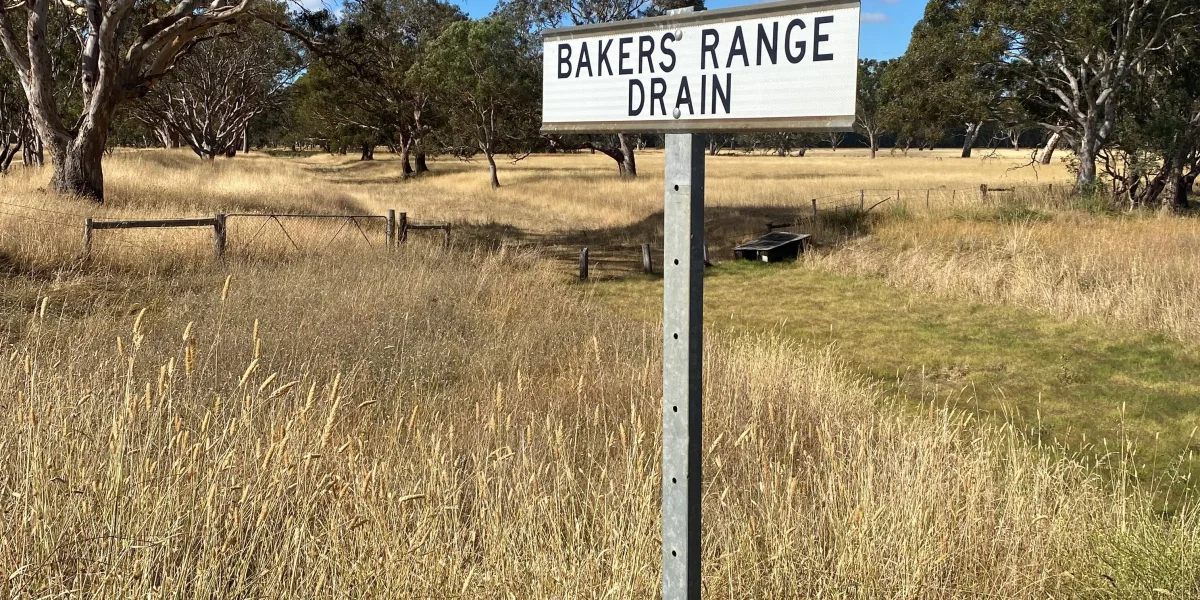
Holding water up in the drains for passive managed aquifer recharge. This option focused on localised recharge and benefits to adjacent wetlands. The highest feasibility areas included eastward of Bakers Range watercourse and inland of the coastal lakes.
How the work was done to understand using water from the drainage network for managed aquifer recharge
Stakeholders took part in meetings, workshops or briefings in 2022. Consultation with stakeholders covered major primary industries, including plantation forestry, grape and wine producers, dairy, potatoes and onions, small seed and irrigated pasture growers.
Environmental groups, State and Local Government and First Nations were also invited to provide their perspectives. There was widespread interest for more strategic and integrated water management in the region.
Stakeholders viewed retention of drainage water in the landscape as needed. But it should not be for the sole purpose of providing allocation for extractive users. There was a view that surface water that could be stored should be used to help restore high value wetlands in stressed areas.
Historic and current data on drain flows informed the assessment of the availability and quantity of water in the network. To identify possible locations a criteria matrix was used in a spatial analysis. This identified potential locations for each of the schemes. The essential criteria included:
- Aquifer suitability: depth to groundwater.
- Water demand: Total annual use 2021 and presence of wetlands.
- Water availability: Proximity to drainage network.
Challenges with using water from the drains for managed aquifer recharge
Each of these schemes have unique risks and challenges. Stakeholders were key in considering what these might mean for industry and water users.
Some of the challenges include:
- localised waterlogging associated with water table mounding
- impacts to neighbouring properties
- reduced flows to the environment
- higher salinity due to reduced flows
- contamination of receiving aquifers
- water may not be available where and when there is a need.
Any change to management of the drainage network may impact on current land use and existing private drains. This is an important consideration.
Next steps to understand the use of water from the drains for managed aquifer recharge
Community or on-farm managed aquifer recharge
Projects and locations where there are managed aquifer recharge scheme aims would guide further analyses.
Regional water transfer and managed aquifer recharge
This option also needs projects and locations with a managed aquifer recharge need to drive the necessary detailed analyses.
Holding water up in the drainage network
Projects are underway where water is held up in the drainage network to deliver environmental benefits. These benefits could be expanding the area or duration of inundation or returning wetlands to the landscape. Using drains to store water for economic benefit hasn’t been explored yet. This option also needs a specific project and location to support more detailed analysis.