Posted on
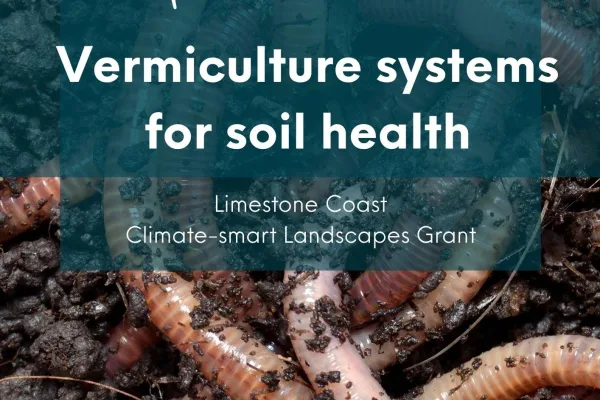
Can worm farming improve soil health?
Join us for the launch of the Vermiculture System to Improve Soil Health and Nutrient Cycling project, a two-year trial investigating the benefits of vermi-cast and vermi-liquid products produced through an on-farm vermiculture system.
The project will assess how these biological inputs influence:
- soil biology
- soil structure
- nutrient availability
- water infiltration
- nutrient cycling.
Demonstration paddocks established on in a pasture system will compare:
- control (no amendment or fertiliser)
- standard NPKS fertiliser (16:3:16:14) at 200kg/ha
- vermi-liquid at 15L/ha
- vermi-liquid at 15L/ha plus NPKS fertiliser at 100kg/ha.
This first field day coincides with the initial application of treatments and will provide an opportunity to learn about the set up and practical application of vermiculture in pasture systems.
Topics include:
- Why worm farming and worm castings are being researched,
- How worm pod systems work.
- Feedstocks and preparation.
- How worm brew is produced.
- Beneficial microbes found in worm cast concentrate.
- Benefits of worm castings and worm brew for pasture.
- Understanding biological inputs.
- Trial layout and treatments.
- Soil testing and monitoring.
- Applying worm brew to pasture.
- Questions and discussion.
This event is suitable for landholders, producers, agronomists, agricultural advisors and anyone interested in soil health and sustainable farming practices.
📍 Location: 237 Kingsley Rd, Allendale East 5291
📅 Date: 3 September 2026
🕒 Time: 11 am – 1 pm
Registration is essential.
This Vermiculture System to Improve Soil Health and Nutrient Cycling in the Limestone Coast project is supported by the Australian Government through funding from the Natural Heritage Trust under the Climate-Smart Agriculture Program and delivered for the Limestone Coast Landscape Board, a member of the Commonwealth Regional Delivery Partners panel by Liam Neil Kemp.